
Pyrroles Disorder
So what is Pyrroles Disorder?
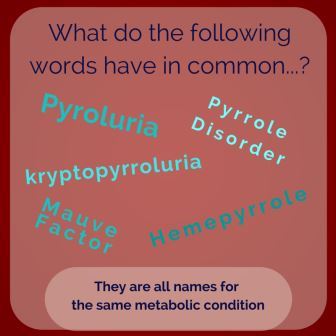
Pyrrole disorder, also known as pyroluria, kryptopyroluria, kryptopyrole or Mauve disorder is a biochemical imbalance involving an abnormality synthesis and metabolism of haemoglobin that can be purely genetic or acquired through environmental and emotional stress and especially from ‘leaky gut syndrome’ and the over use of antibiotics.
So what does this mean?
All cells in your body produce waste or by-products. The by-product of haemoglobin is called hydroxyhemopyrrolin-2-one (HPL) also known as Pyrrole. People who have Pyrrole Disorder, produce excessive amounts of these Pyrroles which then bind to or stop the following the nutrients from being used; Zinc, B-6 and the Omega 6 Fat GLA. Thus, these nutrients cannot be used by the body.
What are the causes? What are the symptoms? How is it diagnosed? How is it treated?
In short, there are three main nutrients that are not properly absorbed in the pyroluric sufferer:
vitamin B6
magnesium
zinc.
B6 in particular is necessary for the creation of red blood cells. It increases energy levels and proper cognitive function. A deficiency of B6 will often cause inflammation, depression, and sometimes anaemia. Magnesium is often used as a muscle relaxant for athletes, and a deficiency can be the cause of painful neck aches, sleeplessness, constipation issues, and even nervous twitching. Zinc, on the other hand, is vital for concentration, memory, and good digestion, and when lacking, can lead to anorexia, leaky gut syndrome and digestive disease.
CAUSE:
Pyrrole disorder is caused by the overproduction of hydroxyhempyrolin (HPL). The HPL binds zinc and B6 preventing their use by the body and causing excretion in the urine and hair. HPL is a biomarker for oxidative stress and is neurotoxic. Stress of any kind will increases production of pyrroles/HPL which in turn decreases zinc and B6.
There is evidence to suggest that Pyrrole Disorder is a genetically based ailment as well as a disorder caused by a variety of lifestyle issues such as poor diet, leaky gut syndrome, stress and poor digestion. Statistics and research indicates that if a relative sufferers from Alcoholism, Schizophrenia, Depression, Bi-Polar Disorder or has suicided, there is a greater risk of Pyrrole Disorder in other family members.
Poor dietary choices and poor digestive health can lead to an increase in Pyrrole levels as a low nutrient diet will not deliver all of the nutrients a body needs much less one with the need for additional support.
Leaky Gut Syndrome (also known as intestinal permeability), is a condition whereby microscopic holes occur in your intestinal wall and allow undigested food, bacterial by-products, poisons and toxins to pass into your bloodstream. Leaky Gut Syndrome is common in sufferers of Pyrrole Disorder and a common factor for increasing blood Pyrrole levels.
Alcohol, smoking, drugs and heavy metal exposure can dramatically increase blood pyrrole levels. This is why people who have Pyrrole Disorder will tend to get a worsening of their symptoms 24 to 48 hours after a big night out drinking or recreational drug use.
Research has discovered that stress increases the production of HPL in your blood, which in turn causes a worsening of your symptoms. It is a well known fact that stress damages the intestinal wall causing intestinal inflammation. Both of which lead to an increase in Leaky Gut Syndrome.
Studies have shown that zinc deficiency increases bowel permeability too.
Candida, an overgrowth of fungal spores in the intestinal tract, has also been linked to an increase in blood HPL levels as well as contributing to Leaky Gut Syndrome.
The main biochemical features are of severe zinc and B6 deficiency. Zinc is essential for 100’s of processes in the body and is particularly important for healing, immune function, digestion, neurotransmitter activation, physical growth, memory, insulin sensitivity, and control of blood sugars, DNA replication and more….
Zinc and B6 are essential for production of neurotransmitters such as serotonin (our happy hormone), melatonin (our sleep hormone), GABA (our relaxation hormone), and acetyl choline which is important for memory. They are also involved in production of our steroid hormones such as cortisol (our anti-inflammatory, anti-allergy hormone and stress hormone) and the conversion of oils in the body (fat metabolism, liver and gall bladder issues and weight control). The oils EPA/DHA but mostly GLA are found to be low in those with pyrrole disorder and are damaged by oxidative stress/free radicals/toxins created by pyrrole.
Signs and symptoms:
White spots on fingernails, hypoglycemia/sugar intolerance is common, as are food and environmental allergies.
Other common symptoms are joint pains (especially knee pain), fatigue, headaches (especially migraine headaches), bowel dysfunction such as irritable bowel syndrome, easy bruising, dizziness, insomnia, poor memory and difficulty concentrating. Poor stress control, nervousness, anxiety, mood swings, severe inner tension, episodic anger, poor short-term memory and depression are other common symptoms
Obviously, such symptoms are common, and not everyone who has them will have pyrroluria and not everyone with this disorder will have all of the symptoms and may even have only two, but have difficulty treating these symptoms with the usual methods.
These signs and symptoms can be associated with a large number of ailments and are intended as a guide only. To confirm whether or not you have Pyrrole Disorder, you will need to have appropriate testing.
Abdominal pain, Abnormal body fat distribution, Acne, Allergies, Amnesia spells, Anger – explosive, Anxiety/anxious, Argumentative – likes to argue, Cold hands and feet, Constipation, Creaking in joints, Delayed puberty, Delusions, Depression, Difficulty remembering dreams, Dramatic, Dyslexia, Early greying of hair, Eczema, Elevated eosinophil’s, Emotionally unstable, Fatigue, Fluid retention, Frequent colds, fevers, and chills, Frequent ear infections as a child, hallucinations, Hyperactivity, Hypersensitivity to noise, Hyper-pigmentation of the skin, Hypoglycaemia, Inability to think clearly, Insomnia, Intolerance to alcohol, Intolerance to drugs, Intolerance to some protein foods, Joint pain, Lack of hair on head, eyebrows and eyelashes areas, Lack of regular menstrual cycles, Loss of appetite, Low libido, Low tolerance to stress, Migraines, Mood swings, Morning nausea, Motion sickness, Much higher capability in the evening than mornings, Nervous exhaustion, Nervousness, Overwhelmed in stressful situations, Pale skin, poor tanning or burn easy in the sun, Panic attacks, Paranoia, Pessimism, Poor memory, Poor morning appetite/tendency to skip breakfast, Preference for spicy or heavily flavoured foods, Prone to stitches when running now or as a child, Reading difficulties, Seizures, Sensitivity to bright light, Sensitivity to smells, Severe inner tension, Skin rashes, Significant growth after the age of 16, Social withdrawal, Substance abuse, Temper tantrums, Tendency towards iron deficient anaemia, Tingling in the arms and legs, Tremors, Unusual smelling body odour, Unusual smelling breath.
The following conditions are associated with Pyrrole Disorder:
Acute Intermittent Porphyria, ADD/ADHD, Alcoholism, Allergies, Asperger’s Syndrome, Autism, Bi-Polar Disorder, Criminal Behaviour, Depression, Down Syndrome, Epilepsy, Learning Difficulties, Lung Cancer, Manic Depression, Neurosis/Neurotic, Post Natal Depression, Schizophrenia, Substance Abuse, Tourette’s Syndrome, Violent Offenders.
Unusual Body Appearances Associated with Pyrrole Disorder:
There can also be abnormalities in physical appearance including;
• If your family has black skin yours will be the lightest skin in your family
• Lack of hair on your head, eyebrows and eyelashes
• Skin which is prone to stretch marks
• Teeth in your upper jar will often be overcrowded (unless orthodontic treatments have taken place)
• White spots on your fingernails
• You may suffer from acne, eczema or herpes
• Your tooth enamel has a poor appearance
• Your skin will appear paper thin
Diagnosis:
Pyroluria is diagnosed by a simple urine test which detects KPU in urine.
TREATMENT:
The treatment to correct the imbalance seems surprisingly simple. It involves taking zinc, vitamin B6 and/or pyridoxal 5-phosphate (activated B6), GLA, an essential omega 6 fatty acid found in evening primrose, borage and black currant oil, Vit E and magnesium.
However, just because the treatment seems relatively simple to describe does not mean that it is easy to do. As people start to take these needed nutrients they may feel terrible as heavy metals and other toxins are released into circulation and their immune system is activated, causing microbial toxins to also be released.
These nutrients should be introduced gradually with the supervision of a qualified practitioner and often need further support on an individual basis. It is not advisable for people to self medicate as B6 & zinc toxicity can also be an issue for some people if their body still can’t utilise these nutrients properly and so close observation by an experienced practitioner is important.
Adding the nutrients that will correct the pyrroluria will not make all of the patients problems go away, as those who have this tend to have chronic microbial infections, a sea of accumulated toxins and a history of emotional wounds to still deal with. Correcting the pyroluria, however, will allow them to respond appropriately to other treatments that would have been previously ineffective and help them to finally move down the road towards true healing.
Unfortunately pyrroluria is not a recognized condition by many health practitioners. It is wide-spread and mental health experts estimate as high as 20% of all psychiatric patients and 40% of people with schizophrenia and 5% of ‘normal’ people have pyroluria. I personally am seeing this statistic a lot higher in my clinic in ‘normal’ clients. It seems to affect women more than men but unfortunately most people with pyrroluria go undiagnosed.
Other nutrients may assist include niacinamide (B3), pantothenic acid (B5), methylcobalamin (B12), manganese, vitamins C, E and magnesium. Food sources and nutritional supplements containing copper and red/yellow food dyes should be avoided. Copper is commonly high in people with pyroluria and needs to be detoxified. It is advisable to have mineral and metal levels, ratios and balances performed by a Hair mineral analysis to get the treatment correct.